
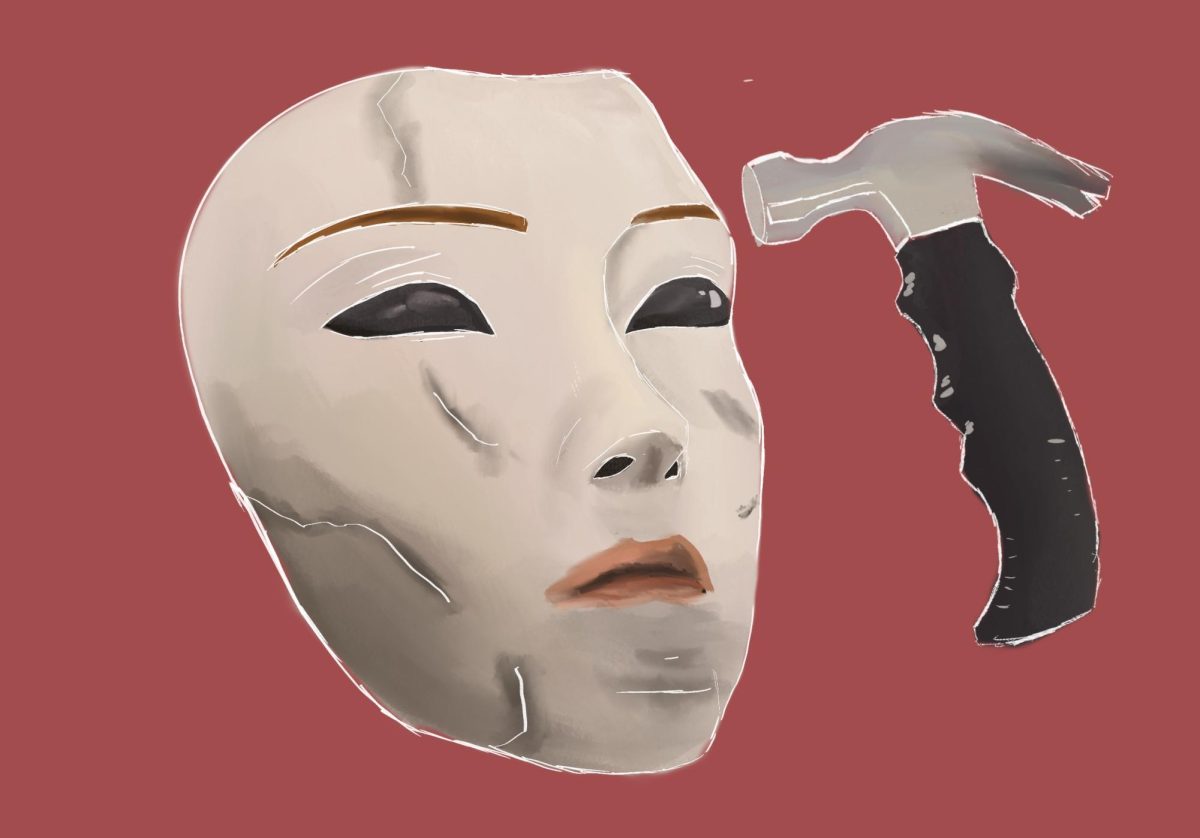
Bonesmashing, Mewing, Framemogging: there seems to be no end to the looksmaxxing trend.
What started as a phrase used on obscure internet forums nearly a decade ago, ‘looksmaxxing’, or the process of maximizing one’s physical attractiveness, has taken mass media by storm. Across many social media platforms, such as Instagram and Tik Tok, looksmaxxing influencers advocate for an array of appearance-enhancing techniques: from skincare and hair hygiene (referred to as softmaxxing) to altering one’s facial structure (referred to as hardmaxxing). Strategies to achieve the perfect look can take the form of smashing one’s face with a hammer, chewing ‘jaw-enhancing’ gum, or even injecting steroids.
At first glance, the looksmaxxing movement seems ridiculous. Born out of the unseriousness that is social media, watching ‘mogging’ contests or being fed clips about bonesmashing is almost inherent in an algorithm meant to feed us content that shocks and entertains. But within that realm of unseriousness are influencers like Clavicular – perhaps the most well-known looksmaxxer – who treat the movement as a dogma.
A 20-year-old streamer, Clavicular has gone viral for his looks-enhancing ideology and public stunts numerous times. He’s hit a man with his cybertruck, espoused racial slurs on livestreams, and toured college campuses to compare himself with others. Clavicular’s content has amused millions. But it has also shed light on the dangers associated with a purely looks-centric mentality.
For starters, looksmaxxing directly promotes the idea that physical appearance trumps someone’s personality and intelligence. As sophomore James Ceridono said, “People are starting to view looks as everything, like they’re the major point of attraction.”
And while a healthy attention to one’s appearance is beneficial and often a necessity for success, the narcissistic obsession that comes from looksmaxxing degrades our collective humanity and what we as a society deem valuable.
The Greek myth of Narcissus, for instance, tells of a handsome man who scorns his romantic admirers. As punishment for his vanity, he is cursed to fall in love with his own reflection in a pool of water, eventually wilting away to death. Like other fables and texts, Narcissus teaches us that beauty is expendable and that true virtue does not come from the mirror, but from our interactions with those around us. Looksmaxxing, it seems, contradicts this narrative.
Beyond the simple moral cheapening inherent in looksmaxxing, senior Lucas Katz added that “[Looksmaxxing] has a pretty negative effect because it encourages unrealistic standards and unhealthy ways to improve your looks.” Merged with social media as a tool for mass dissemination, looksmaxxing has created the perfect formula to foster self-consciousness.
In the past, conventional beauty standards have often been associated with the female struggle. Across both culture and society, women have been told how to look, how to eat, and how to dress in order to fit an oppressive mold. Now, young men are facing the beginnings of a similar crisis of insecurity – one that’s framed as liberating and powerful.
Senior Taejin Chung said, “I think [Looksmaxxing] definitely damages people’s self confidence. It’s kind of like any other past beauty campaign: it’s successful because it’s using people’s insecurities to be successful.”
In addition to instilling unrealistic beauty expectations, looksmaxxing reinforces the detrimental element of competition instead of empathy. At Campolindo, we’ve seen how academic and athletic pressures can transform a student body into a group of overstressed teens. We’ve also seen how such rampant pressures breed peer-to-peer competition: whether it be comparing grades or college acceptances. Looksmaxxing only furthers the cutthroat pecking-order construct of our modern world by teaching young people that success is a zero-sum game.
Still, it’s easy to dismiss Looksmaxxing altogether, and that’s part of what makes the trend so deceptively dangerous. Even if you’ve never subscribed to the wild advice of Clavicular or picked up bonesmashing yourself, you’ve grown up in a world increasingly shaped by the pressures of social media and the urgency of creating an ‘image’. Looksmaxxing isn’t an anomaly, but a symptom of a downward spiral into social fragmentation and digital toxicity.
Like all things, social media proves to be the ultimate culprit. According to recent polls, teens spend an average of about five hours a day on social media apps specifically. And with tech giants currently on trial in a landmark case over social media’s addictive features, the verdict has never been clearer: social media is the problem.
Even if laws were passed to regulate teen access to such platforms, the reality remains that isolation and nihilistic tendencies will persist. As Chung said, “I think [Looksmaxxing content] is here to stay.”
So then the issue falls to us. The answer isn’t to simply unplug or retreat from the depths of internet slop, but to embrace the values that have driven humans across centuries of time. Spending time with friends, volunteering in your community – there’s a myriad of ways to “touch grass” and discovering the beauty behind the screen. Learning how to express compassion, especially in times of political turmoil and uncertainty, reaffirming what is virtuous requires looking beyond the reflection in a tidepool.