This year, English 2 classes incorporated an immigration policy brief project to precede their curricular reading of The Leavers, a novel by Lisa Ko. English teacher Katie Terhar has successfully done a similar project in past years. She proposed it to her department here at Campo thinking it would be especially impactful considering the current omnipresence of immigration issues.
Sophomore English 2 students chose a specific topic related to immigration issues. They then researched, thoughtfully synthesized, and ultimately produced a possible solution – a policy brief.
Terhar wanted her students to engage with the material and experience the process without hyper-fixating over a graded end result. She also wanted their research and discussions of complex immigration issues to feel manageable. The policy briefs were made into concise two page works with visuals to accomplish these objectives.
In a world of quick clicks and rushed, if not blatantly ignored, context, Terhar wanted to help her students “learn how to access information.” She said, “I want them to be able to discern what is a reliable source versus an unreliable source. I want them to be critical of what is being fed to them and to have a similar basis of knowledge so that we can then walk through the novel together and have deeper discussion based on a common understanding of the issue.”
Not only did students complete their own projects, they also shared them with each other. An open, respectful dialogue was facilitated to reach the “common understanding” with more cultivated thought and empathy. This quality of thought and empathy was a way to deepen students’ analytical reading of The Leavers, and how the characters experience different ramifications of immigration. It also contributes to building essential skills for real world interactions.
For Terhar, the parallel between analyzing characters in novels, with open, fair, compassionate minds, and social justice is clear. She said, “literature, fiction in particular, is a great way for students to learn empathy. I think there’s a certain safety in analyzing a character and their motives without judgement, versus a real, living, breathing person.” Tying it back to The Leavers Terhar, “wanted to use this novel that deals with an immigrant and what happens to her as a way to kind of allow the students to really lean in and imagine the perspective of someone that they may not have.”
Political, social, and cultural issues exist diversely on many spectrums. Today, hot button issues, like immigration, are fraught with polarization, misinformation, and extreme controversy. How do teachers and administrators approach these issues safely, respectfully, and fairly in a classroom?
Terhar said “we need to provide information, and I think we need to give students agency and meet them where they are…I think providing a structure where they can pick and choose [like they were able to do with the project topics] is my hope that then will increase engagement.” She believes it is her job to provide students with a contextual foundation to then expand on in the direction they desire whether it is personal, political, ethical, or other.
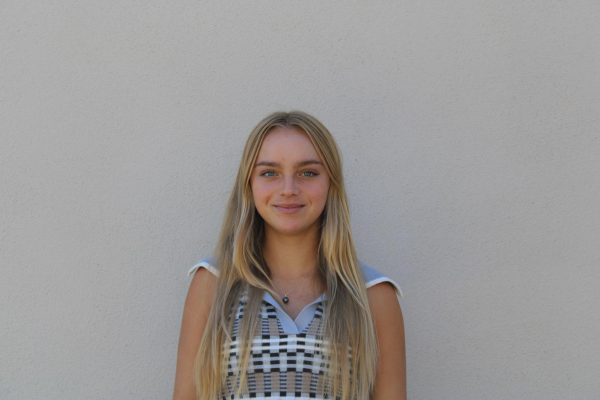
Two sophomores who particularly embraced and appreciated this kind of learning process are Raini Chugh and Emma Johnson. They completed their projects in English teacher Lauren Henson’s class during January.
Johnson partnered up with her peer sophomore Diana Cardenas and focused on the lack of due process for immigrants in the United States right now. Johnson emphasized the importance of the project: “I saw the value in it…this is something that’s happening and it affects our generation.”
Chugh shared Johnson’s sentiments. She focused on the current crisis with ICE and the broad orders they are given by the government. In her policy brief she wanted to “target how broad their orders are and how that allows them to get away with anything like using force similar to what’s happening in Minnesota right now.”
The learning objectives for the policy brief project – to use reliable sources, research the necessary context behind crises our world is facing, and raise our voices to find paths through the darkness – extend far beyond the classroom. In Campo’s very own English 2 curriculum we can witness the small things happening, the small things that can shape student perspectives and help them bring about big change in their future endeavors.