
In a generation filled with ambitious students, standing out has become more important than ever. Whether it’s filling your schedule with advanced placement classes, committing to four years of sports, or participating in a multitude of extracurriculars, high school students are taking on more than previous generations. At a competitive school like Campolindo, the pressure to stand out and succeed is exponential. Students aren’t just expected to succeed, they are supposed to excel in nearly all academic and extracurricular areas in their life while still maintaining a balanced and healthy schedule. But at what point does this drive turn into too much?
Campolindo has a reputation to have a competitive school environment where students are told to maintain high GPA’s, have outstanding test scores, and demonstrate involvement in activities that exhibit leadership, and passion, all in order to get into top colleges, something a majority of Campolindo graduates were able to accomplish. Campo’s outstanding representation comes with higher expectations of students. Although these goals are meant to drive students for future success, it often creates an overwhelming schedule that leaves little room for students to rest. Many students are finding themselves stretched too thin, struggling to keep up with this high demand.
This pressure isn’t just in the classrooms, it’s affecting personal lives. After a day of school, some students will go straight to sports, clubs, or part-time jobs. Once they are done, they are expected to complete hours of homework, often for multiple AP courses, with a heavy workload. These classes are designed for college-level-lectures, so the course work can be very difficult. Over time, the constant cycle of pressure and responsibility can cause students to experience burnout, exhaustion, and higher stress levels.
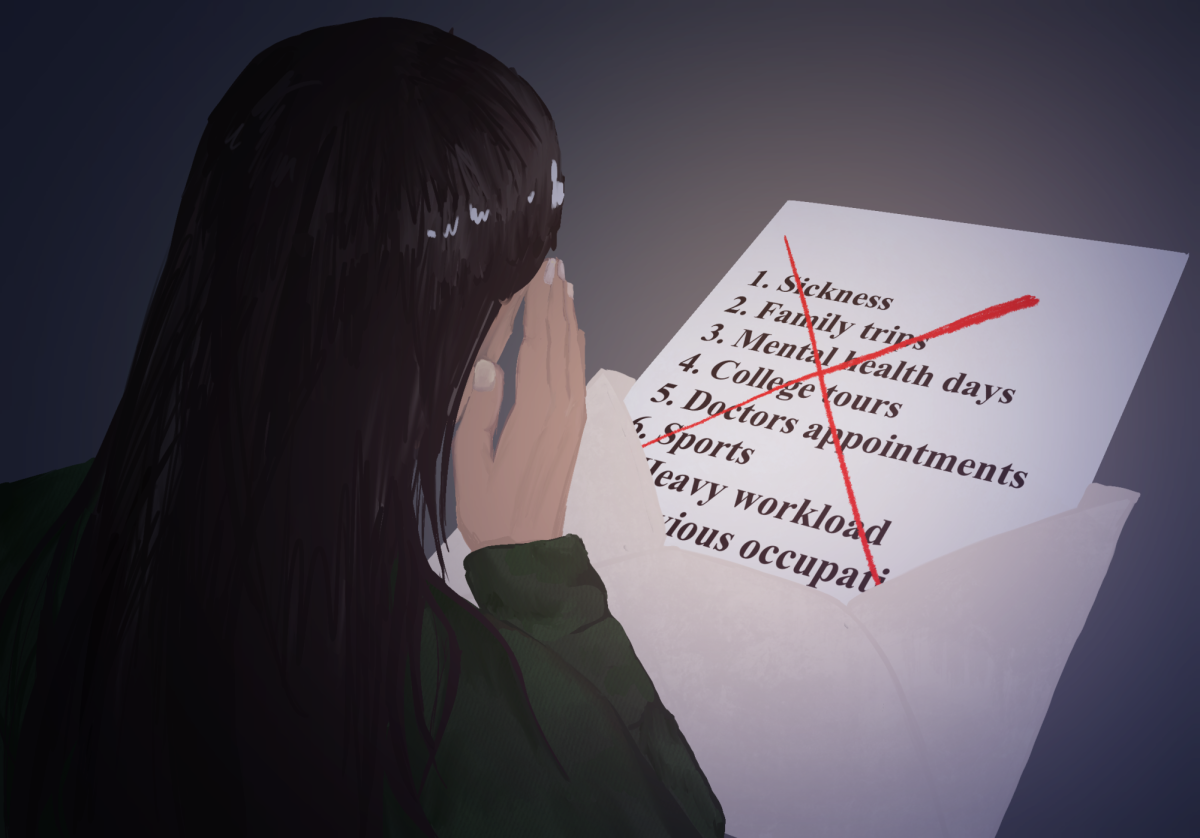
One of the clearest examples of school pressure is the attendance policy. Over the course of a school year, students will be given ten full days of absence. Any more than that, a formal letter is sent to both the student and their guardian, often following with a meeting with both the student and administration. The policy is initially meant to encourage people to show up to class and have a consistent attendance, but it doesn’t really take into account the reality of students’ lives. Illnesses, family obligations, college visits, and even mental health days can lead to those ten days being used up quickly, making the ten day limit feel restrictive.
For some students, receiving a ten day letter has become a more common experience than an exception. Rather than feeling supported, students may feel penalized during times of stress, illness, or personal hardships, often circumstances that they can’t control. This raises an important question: should schools be more flexible when it comes to absences, when those absences are tied to legitimate needs?
Senior Sage Balducci experienced this firsthand after she was threatened with detention due to missing school for her college auditions. Looking back on the situation, Balducci explained, “I really think that especially college tours for seniors should be excused as college visits because the whole point of high school is to basically get into college.” Students are encouraged to focus on their futures by working hard, applying for colleges, attending auditions, and visiting schools. But, they still face consequences for exactly that. When important opportunities are labeled as a “vacation,” it may feel like the system is working against the students.
High school coursework carries a demanding nature that plays a significant role in student stress. At Campolindo, AP classes have become the norm, rather than the standard level courses. Over four years, students take an average of seven or eight advanced classes, some taking even more in an effort to stay competitive. While these classes offer a valuable academic challenge, they also come with heavy workloads and high expectations. The pressure to perform well in these courses can be overwhelming, especially when combined with extracurriculars.
The progression of stress throughout high school is another important factor to look at. Freshman year has served as a period of adjustment for many students. Students are given a manageable workload and are still learning how to balance their responsibilities. Freshman Jane Hu shared her experience. She said, “During the fall, I definitely felt a little bit of stress because there’s just practice every day, and I wasn’t really used to the high school schedule yet, but now I feel like I’ve got it pretty figured out and there’s not too much stress with work.” Hu’s experience shows that students can adapt over time; however, it doesn’t fully capture how stress tends to increase over the years.
Moving into their junior and senior years, students’ expectations rise significantly. Junior year is considered the most demanding and important with students taking more AP classes while preparing for standardized tests like the SAT or ACT. Senior year brings a different set of challenges. Writing and submitting college essays, decisions about their future, whether it’s deciding on a college or entering into the workforce. By this point many students feel the cumulative pressure leading to “senioritis” – more seriously known as burnout. What begins as manageable stress leads into something bigger as some feel that every decision they make will impact their future.
Within this context it’s important to acknowledge teachers’ perspectives, and they can be quite different. Teachers will spend a lot of time and effort creating lessons, assignments, and assessments designed to support students and reflect the lessons they’ve taught. When students miss class, they miss important instruction and material that they won’t be able to learn on their own in the same way. This can make it difficult for students to stay on track with the rest of their peers.
Learning Skills teacher Elizabeth Hughes offered insight into a different perspective. Hughes said, “I think taking care of your mental health is very important, and so I don’t want to, like, dismiss that. But at the same time, missing school is going to add to your mental health, like your negative mental health because you’re going to get more stressed out about the assignments that you’re missing or the material that you’re not getting. So I feel like it’s kind of cyclical.” Hughes highlighted the challenges of missing class. While taking time off provides short-term relief, it can also lead to increased stress later on. A cycle is created where students feel stuck, unable to fully address their needs without creating more problems.
This issue isn’t simply about whether students are expected to do too much, it’s about finding a balance that allows students to succeed without sacrificing their well being. Schools play a crucial role in shaping this balance. Reevaluating these policies surrounding attendance can help students feel supported not only academically, but also mentally.