
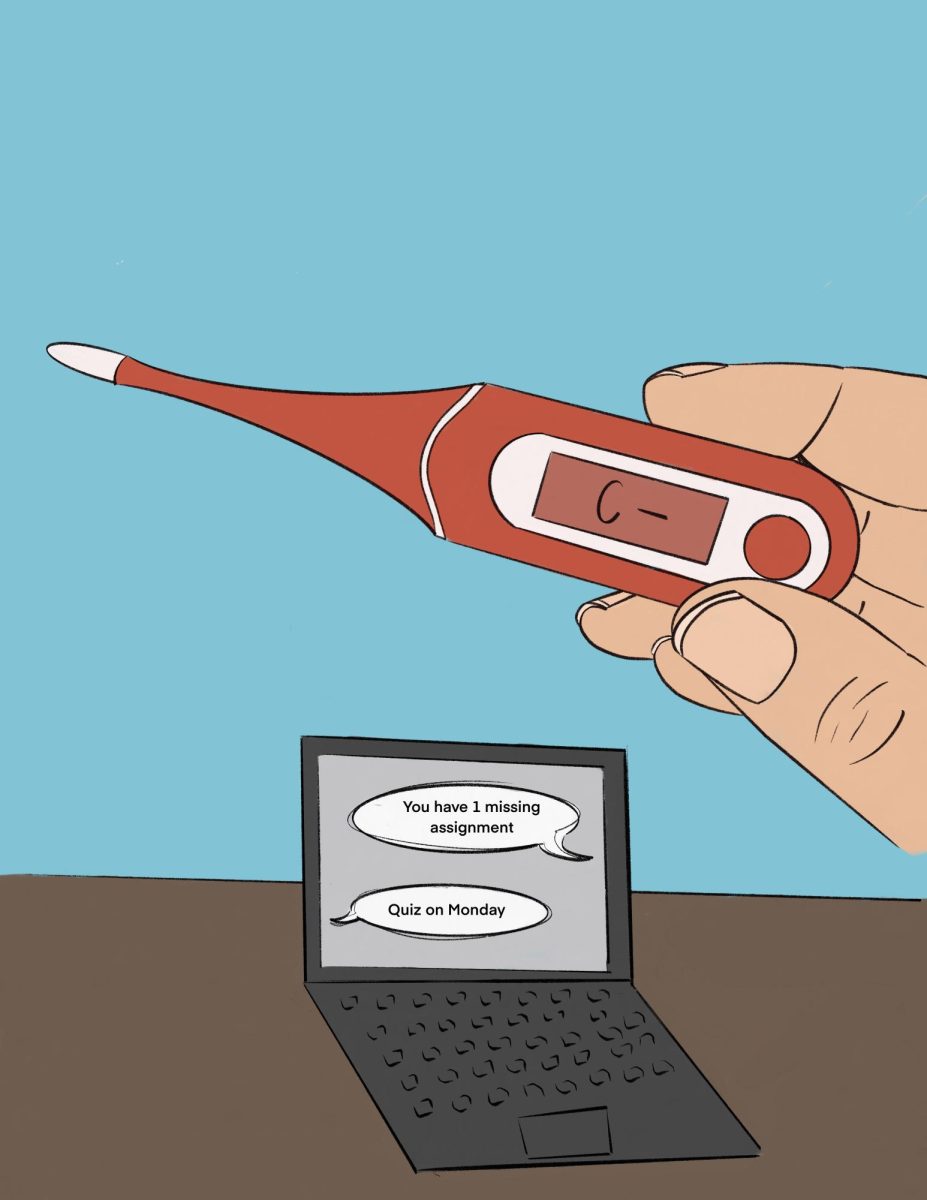
When students get sick and miss school, the expectation is that they recover, but also do the assignments that they miss at home, both schoolwork and homework. Recovering takes time, and students will undergo immense stress because they will have to complete the work in less time then they would get in school. They may miss out on important information, but more importantly, the amount of work and tests will most likely increase when they return. Sick and absent students most likely will need more help from school staff to reduce the pressure, stress, and workload.
Sometimes students miss school when new information is being introduced. They miss information on learning the subject and do not have the opportunity to receive teacher feedback or ask questions. “I feel like I’m missing out a lot and I need to do better,” says freshman Kaleb De Los Santos. With less time to understand, students will fall behind everyone in class and suffer from a lack of preparation for exams.
The work that sick students miss will also add up. When asked about Santos’s main areas of stress from missing school, he replied, “Tests, and a lot of homework. I have a lot of homework.” While assignments would normally be spread out throughout multiple days, before returning, students face multiple days of work in less time – which is overwhelming and challenging to finish.
For some students worried about having to make up tests, coming back to school while still sick is the only option. Freshman Rafi Van Delft stated, “I felt academic pressure to come back to school due to test retakes and tests which I was forced to do while sick because the semester [was] coming to a close.”
Missing school can cause a decline in grades but also mental health. Grades can be a mental burden to students who feel anxious about what they miss, stressed about preparing for future tests, and worried that their absence sets them back. Even with teacher support, students can feel uncertain in an academic environment that demands constant perfection.
“Not being able to attend school has made me extremely stressed and is forcing me to scramble to find the work we are doing in class while I have been absent,” says Van Delft.
These issues are a reminder of the setbacks sick students undergo to keep good grades that are often overlooked. Teachers may support sick students, but after looking at these problems, what practices could make being sick less stressful and provide more aid to students in the future?
One solution for students to catch up is for teachers to give students a brief review of the information missed. They could provide information like main ideas, examples, and the “must know information.” Not only will the student be up to speed but it would take less time for the teacher. The reviews can happen during Academy, before and after class, or even recorded and emailed to the student.
Being tested immediately while unprepared and still recovering poses a big dilemma for returning students. To remedy this, a forty-eight hour buffer rule could be created. No student can be tested within the first two days of returning to school. Students relearn content, ask questions, get advice, and attend Academy.
The experience of being sick at school is a part of a larger problem hundreds of students face every year. When more people miss school due to illness, it is necessary to address these problems that they face any time they return to school. However, students can make a change. As a community, we should encourage solutions to be used by teachers and provide empathy and support to sick classmates and friends, making sure that more sick students have the support they deserve.